Toyota Radiators
Toyota Radiators UAE
Toyota Radiators UAE sourcing from UAE provides access to genuine, OEM-equivalent, and quality aftermarket radiators for Toyota vehicles. Dubai's concentrated auto parts ecosystem, strategic location, and established logistics infrastructure make it the Middle East's premier sourcing hub for workshops, fleet operators, dealers, and vehicle owners across GCC, Africa, and South Asia.
Mosarat Auto Parts connects buyers worldwide with vetted UAE wholesale suppliers offering competitive pricing, VIN-based parts verification, and complete export documentation for smooth international shipments.
The demand for reliable Toyota radiators spans commercial fleets operating in extreme climates, workshop chains serving multi-brand portfolios, and individual vehicle owners seeking cost-effective replacements. UAE suppliers stock radiators for current and legacy Toyota models, from compact sedans like the Yaris and Corolla to heavy-duty trucks like the Land Cruiser and Hilux. This depth of inventory, combined with Dubai's well-established export infrastructure, makes UAE the logical first choice for MENA and African buyers.
This comprehensive guide covers radiators specifications, genuine versus aftermarket decision frameworks, UAE sourcing advantages, VIN-based identification to avoid fitment errors, international shipping logistics, and the complete 7-step RFQ process for procurement teams and workshop managers seeking reliable radiators supply from Dubai.
Why UAE for Toyota Radiators UAE
Dubai concentrates authorized distributors, regional aftermarket agents, and specialist importers serving Middle East, African, and Asian trade lanes. For buyers seeking radiators for Toyota vehicles, UAE sourcing offers unmatched availability depth, competitive wholesale pricing, and supply chain speed that single-market suppliers rarely achieve.
GCC-spec radiators differ from other regional variants with enhanced specifications suited to extreme heat, humidity, sand, and dust. VIN-based verification prevents costly fitment errors caused by market-specific engineering variations.
The UAE's position as a re-export hub means suppliers stock radiators for diverse Toyota markets: Japanese domestic models, GCC-specific builds, African grey imports, and European-spec vehicles. This diversity allows workshops and exporters to source multiple regional variants from a single location, consolidating freight and reducing procurement complexity.
Why Choose Mosarat Auto Parts
- Genuine, OEM-equivalent, and verified aftermarket radiators clearly labeled by quality tier and origin
- VIN verification to match specific chassis configurations and avoid compatibility errors
- Expert procurement team with direct access to UAE wholesale networks and authorized distributors
- Competitive pricing leveraging Dubai's concentrated supply ecosystem
- International shipping to GCC, Levant, Africa, and South Asia with full customs documentation
- WhatsApp support and online RFQ portal for fast itemized quotes typically within 30 minutes
Toyota Radiators UAE Categories and Specifications
Below are key specifications and sourcing considerations for radiators. Prices vary by vehicle model, generation, quality tier, and destination — request a live UAE quote for accurate pricing and lead times.
Genuine Parts
Factory-authorized radiators with manufacturer branding, warranty support, and guaranteed fitment. Best for safety-critical applications, customer-facing repairs, and vehicles under warranty. Premium pricing offset by reliability and warranty coverage.
OEM and Premium Aftermarket
Equivalent manufacturing quality from original equipment suppliers or established brands. Mid-range pricing (30-50% savings vs genuine) with strong quality consistency when brands are verified. Suitable for fleet operations and high-mileage vehicles.
Economy Aftermarket
Budget-focused radiators from various manufacturers. Lowest pricing (50-70% savings vs genuine) with variable quality depending on brand reputation. Best for non-critical applications, older vehicles, or price-sensitive fleet operations willing to accept higher replacement frequency.
Genuine vs OEM vs Aftermarket Decision Framework
Choosing between genuine and aftermarket radiators depends on vehicle use, budget constraints, warranty requirements, and risk tolerance. Safety-critical systems warrant genuine or carefully verified OEM brands. Wear items and consumables can safely use quality aftermarket when brand reputation and application are confirmed.
| Factor | Genuine | OEM / Premium | Economy |
|---|---|---|---|
| Price | Highest | Mid-range | Lowest |
| Quality consistency | Highest | High when verified | Variable |
| Warranty clarity | Strong | Brand-dependent | Weak/absent |
| Best use | Safety-critical, warranty | Fleet operations | Budget-constrained |
VIN Verification for Accurate Fitment
Toyota vehicles are sold across multiple markets with region-specific specifications, cooling packages, and engineering revisions. A vehicle built for GCC heat differs substantially from European or Asian variants even when model year appears identical.
Mosarat uses VIN (17-character chassis number) plus manufacturer catalog cross-references to identify exact specifications and avoid fitment errors. Upload your VIN via /vin or include it in your RFQ for generation-accurate, market-specific radiators quotes.
UAE as Strategic Sourcing Hub
Dubai's auto parts ecosystem concentrates wholesale suppliers, authorized distributors, and freight forwarders serving GCC, African, and South Asian markets. For buyers in Saudi Arabia, Kuwait, Qatar, Bahrain, Oman, Egypt, Jordan, and beyond, UAE sourcing provides availability depth and competitive pricing.
Mosarat operates within this network: RFQs matched to vetted suppliers, quoted with transparency (genuine/OEM/aftermarket clearly labeled), exported with complete customs documentation.
Radiator Core Construction and Material Considerations
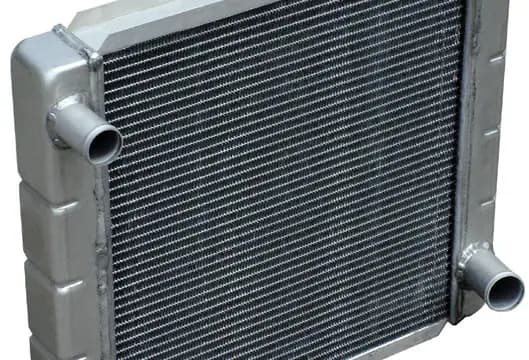
Modern Toyota radiators use aluminum cores with plastic end tanks, replacing older brass-and-copper designs. Aluminum offers lighter weight and lower manufacturing cost but requires careful handling during installation and transport to prevent damage to thin fins and delicate plastic tank mounts. Premium aftermarket radiators may use thicker aluminum or reinforced plastic tanks to improve durability in harsh conditions.
Core thickness (measured in rows of tubes) varies by market and vehicle application. GCC-spec Land Cruisers often feature 3-row or 4-row cores with enhanced fin density to maximize heat rejection in 45-50°C ambient temperatures, while the same model sold in Europe may use a 2-row core sufficient for temperate climates. VIN verification identifies the correct core specification for your vehicle's market build, preventing under-cooling from installing a light-duty radiator in a vehicle designed for heavy-duty use.
When selecting aftermarket radiators, verify core dimensions (height, width, thickness) match OE specifications and mounting brackets align with chassis mounting points. UAE suppliers can provide technical specifications and fitment photos before shipment for high-value orders, reducing return risk from incompatible units.
International Shipping Process
- GCC destinations: Road or air express typically delivers in 2-5 days once picked and cleared
- Egypt, Jordan, Levant: Air for urgent parts; sea freight for volume orders
- Africa & South Asia: Air for critical downtime; sea consolidation for recurring orders
- Customs documentation: Commercial invoices, packing lists, certificate of origin, HS codes included
- Freight quotes: Delivery timelines and costs stated clearly based on mode and destination
Common Toyota Models and Radiator Specifications
Different Toyota models use radiators with varying core sizes, mounting configurations, and cooling capacities:
Land Cruiser (70, 100, 200 Series)
Heavy-duty radiators with larger cores designed for desert climates, towing, and off-road use. GCC-spec Land Cruisers often feature dual-core or tri-core radiators with enhanced fin density. VIN verification critical due to engine variants (V6, V8, diesel vs petrol).
Hilux and Fortuner
Mid-size radiators varying by engine (2.4L, 2.7L, 2.8L diesel, 4.0L V6). Market packages differ: African-market Hilux may use different cooling specs than GCC versions. VIN prevents ordering wrong core thickness or mounting-bracket configuration.
Camry and Corolla
Sedan radiators with compact designs. Hybrid variants (Camry Hybrid) use different radiators than conventional petrol models. Model-year facelifts can change radiator mounting points and hose configurations.
Prado and RAV4
SUV radiators with moderate core sizes. Prado's heavier weight and optional towing packages may require larger-capacity radiators than base models. RAV4 hybrid uses integrated cooling for the hybrid system.
Yaris and Hiace
Compact and commercial vehicle radiators. Hiace variants (passenger vs cargo van) may have different cooling requirements. Yaris radiators are straightforward, but regional emissions packages can affect radiator fan and shroud configurations.
Radiator Failure Modes and Inspection
Understanding how radiators fail helps workshops diagnose issues and order the correct replacement parts:
External Leaks
Visible coolant leaks from radiator core, end tanks, or hose connections. Often caused by road debris, corrosion, or age-related seal failure. Inspection: check for coolant stains, low coolant levels, and overheating symptoms.
Internal Corrosion and Clogging
Blocked cooling passages reduce flow and cause overheating without visible leaks. Common in older vehicles or those with poor coolant maintenance. Inspection: radiator feels cool while engine overheats, poor heater output, or sludge in coolant reservoir.
Impact Damage
Front-end collisions, rock strikes, or debris damage radiator cores. Even minor dents can restrict airflow and reduce cooling efficiency. Inspection: visual examination of fins, core integrity, and mounting brackets.
Fan and Shroud Issues
While not radiator failure per se, damaged fans or missing shrouds reduce cooling performance and may prompt radiator replacement as part of a cooling system overhaul. Inspection: check fan operation, shroud alignment, and radiator mounting points.
GCC vs Other Market Radiator Specifications
Radiators sold in GCC markets often carry enhanced specifications to handle extreme ambient temperatures (45-50°C in summer) and harsh operating conditions:
GCC-spec radiators typically feature larger core surface area, higher fin density, and reinforced end tanks. Coolant capacity may also be higher. For exporters serving African or South Asian markets, confirming whether GCC-spec radiators are required or if standard-market parts will suffice is critical for cost and performance optimization.
VIN verification reveals which market specification the vehicle was originally built for. A Land Cruiser sold new in Saudi Arabia will have different cooling requirements than one imported used from Japan or Europe. Mosarat cross-references VIN data with supplier catalogs to ensure the quoted radiator matches the vehicle's intended operating environment.
Radiator Compatibility with Hybrid and Electric Toyota Models
Toyota's hybrid models (Camry Hybrid, RAV4 Hybrid, Prius, Corolla Hybrid) use radiators that integrate engine cooling with hybrid system thermal management. These radiators often have additional cooling loops, sensors, and connections not found on conventional models.
When sourcing radiators for hybrid Toyota vehicles, always specify the hybrid variant in your RFQ. Standard petrol or diesel radiators will not fit or function correctly. VIN verification is essential to distinguish hybrid from non-hybrid builds, especially on models where both variants share the same chassis code.
Battery-electric models (bZ4X) use different thermal management systems entirely and do not have traditional radiators. Specify the powertrain type clearly when requesting quotes.
Aftermarket Radiator Quality: What to Watch For
Not all aftermarket radiators deliver reliable performance. Quality varies by manufacturer, materials, and construction methods:
- Core construction: Aluminum cores with brazed tubes and fins outperform plastic-tanked models with crimped seams
- End tank material: Aluminum or reinforced nylon; avoid brittle plastic that cracks under thermal cycling
- Pressure testing: Reputable aftermarket radiators are pressure-tested to OE specifications before packaging
- Warranty: Established brands offer 6-12 month warranties; no-name products often lack any warranty support
- Fitment accuracy: Mounting holes, hose connections, and fan mounting points must match OE dimensions exactly
Red Flags in Low-Quality Radiators
Poor fin bonding (fins separate easily), misaligned mounting brackets, incorrect hose nipple sizes, missing or incorrect transmission cooler connections (for automatic transmission models), and generic packaging with no part number or brand identification.
Customs and Import Considerations for Radiator Shipments
Radiators are classified under HS code 8708.9190 (parts and accessories of motor vehicles) with typical import duties ranging from 0-15% depending on destination country. Some African markets impose higher duties on auto parts; confirm local tariffs before placing large orders.
Mosarat provides complete export documentation: commercial invoice with detailed part descriptions, packing lists, certificate of origin (UAE Chamber of Commerce), and HS codes. For countries requiring pre-shipment inspection or import licenses, we coordinate with local freight agents to ensure smooth customs clearance.
Radiators are bulky but not heavy relative to volume, making air freight economically viable for urgent replacements. For recurring orders or multi-vehicle fleets, sea freight consolidation reduces per-unit transport costs significantly.
Installation and Maintenance Best Practices
Proper radiator installation extends lifespan and prevents premature failure:
- Flush the cooling system before installing a new radiator to remove old coolant contaminants and debris
- Replace radiator hoses, clamps, and thermostats at the same time if they show age or wear
- Use the correct coolant type and mixture ratio specified by Toyota (typically 50/50 water-to-coolant)
- Bleed air from the cooling system completely to prevent hot spots and overheating
- Check radiator cap pressure rating matches OE specifications
- Verify radiator fan operation and shroud alignment after installation
- Inspect for leaks after the first heat cycle and retighten hose clamps if needed
When to Replace vs Repair a Toyota Radiator
Minor radiator leaks from hose connections or petcock valves can sometimes be repaired. However, core leaks, cracked end tanks, and internal corrosion typically require full radiator replacement.
Repair makes sense for small external leaks on newer radiators where the core is intact. Replacement is the better choice for radiators older than 8-10 years, those with multiple leak points, or when overheating has already occurred multiple times.
For commercial fleets, the downtime cost of a temporary repair often exceeds the cost of a new aftermarket radiator. Workshop managers should factor in labor time, warranty coverage, and customer satisfaction when deciding between repair and replacement.
How to Request a Quote
- Step 1: Gather VIN or chassis number, model year, engine type, and mileage context
- Step 2: List required radiators with OE numbers if available, or clear descriptions plus photos
- Step 3: Specify destination country and preferred shipping mode (road, air, sea)
- Step 4: Define quality policy: genuine-only, mixed basket, or price-led on consumables
- Step 5: Submit via /quote form, WhatsApp, or email
- Step 6: Receive itemized AED quotation with lead times (typically 30 minutes)
- Step 7: Approve quote, pay via bank transfer or Stripe, receive dispatch tracking
Frequently asked questions
What is the difference between OEM and genuine radiators?
Genuine parts sold through authorized channels with manufacturer branding. OEM means equivalent production without necessarily carrying retail brand path. Mosarat quotes both clearly labeled.
Can I order radiators by VIN?
Yes. Share 17-character VIN on /vin or in RFQ. Mosarat uses VIN plus catalog references to reduce fitment errors.
How long does shipping take from UAE?
GCC road/air often lands in 2-5 days. Africa and South Asia vary by mode — air 5-10 days, sea 3-6 weeks.
Are aftermarket radiators reliable?
Quality aftermarket from established manufacturers can be reliable when brand and application verified. Safety-critical components warrant genuine or proven OEM.
Do you ship internationally?
Yes. Mosarat exports from Dubai across Middle East, Africa, and South Asia with air and sea options.
Do you supply workshops only?
No. We serve dealers, workshops, fleets, procurement teams, vehicle owners, and importers.
How fast can I get a quote?
Most complete RFQs receive itemized response in about 30 minutes during UAE business hours.
What payment methods accepted?
Bank transfer (AED, USD, EUR) and Stripe checkout available after quote approval.
What should I prepare before requesting pricing?
Prepare VIN, part numbers if known, destination country, quality preference, urgency. Photos help when numbers worn.
Do you offer warranty?
Warranty terms depend on part type and quality tier. Genuine parts carry manufacturer warranty via authorized channels.
Can you source hard-to-find parts?
Yes. UAE network includes distributors and specialist importers. Complex RFQs may require 24-48 hours.
What is minimum order value?
No strict minimum. Small urgent orders and large restocks both supported.
How do I track shipment?
Tracking details sent via email and WhatsApp after dispatch.
Do you supply for other vehicle brands?
Yes. Mosarat sources radiators for all major brands. Submit RFQ with vehicle details.
Can I visit your warehouse?
Mosarat operates as export broker connecting buyers with vetted UAE suppliers. Contact team to arrange supplier visits.
Conclusion
Sourcing radiators for Toyota vehicles from UAE combines competitive pricing, supply depth, and established export logistics. The optimal approach: clean parts list, VIN verification, and Dubai quote with transparent quality tier labeling.
Mosarat Auto Parts supports buyers worldwide with itemized RFQs, WhatsApp follow-up, VIN verification, and expert export dispatch from Dubai. Request your quote via /quote.